Quote approvals

Quote approvals that route inside HubSpot, not a separate console

Approvals are easy to have and hard to get right. The job isn’t a sign-off button. It’s routing only the quotes that break policy, to the right person, without a rep able to quietly undo it. That runs on HubSpot’s records here, not in a bolted-on approvals console.

The short answer

What is a quote approval workflow in HubSpot-native CPQ?

It’s the logic that decides which quotes need sign-off before they send, and routes them to the right approver. Quotivity runs it on conditions (a discount past a threshold, a segment, a total) so quotes inside policy send straight through and only the exceptions route. It runs natively on HubSpot’s records, not in a separate system a rep switches into.

What conditional approvals give you

Speed to sign-off

A quote inside policy sends straight through, so approvals stop being the thing every deal waits on. Only the exceptions queue.

The right approver, in order

Route a quote to the person who owns that call, single-stage where one signature is enough, multi-stage where a deal needs two in sequence.

Nothing slips past policy

A quote that breaks a rule can’t send until it’s signed off, so an out-of-bounds discount or total is caught before the customer sees it, not after.
Only the exceptions should stop

An approval process that stops every quote isn’t control, it’s a queue. The reviewers stop reading it, and the whole thing becomes a rubber stamp with a delay attached.

Conditional routing flips that. A quote inside policy never enters a queue; a quote that breaks a rule routes to the person who owns that call. Reviewers see the exceptions and nothing else, which is the only way they keep actually reviewing them.

How an approval runs

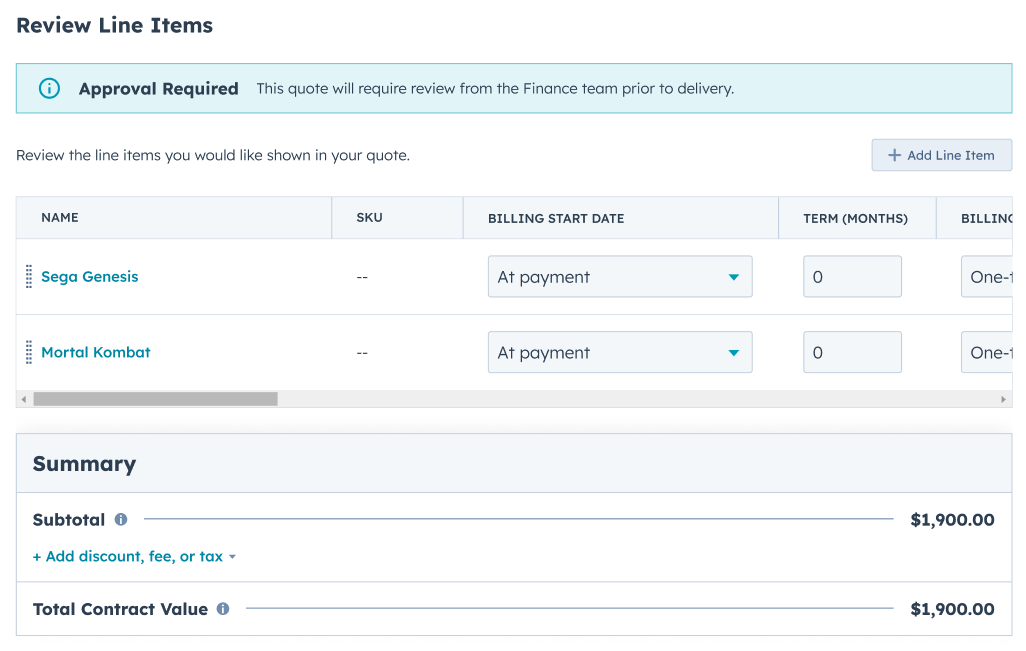
A rep generates the quote

They build it as normal, in HubSpot. Nothing about how a rep works changes, which is the point: the control sits in the rules, not in the rep’s way.

A rep generating a quote in HubSpot with Quotivity
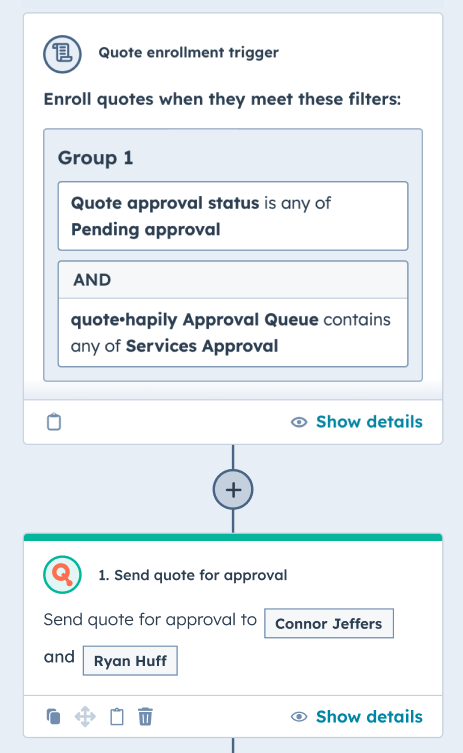
A quote entering the approval flow because it fell outside policy

Only the exception routes

If the quote trips a condition, a discount past the ceiling, a total over a threshold, a flagged product, it enters the approval flow. If it doesn’t, it sends straight through. Multi-stage where a deal needs two signatures, single where it needs one.

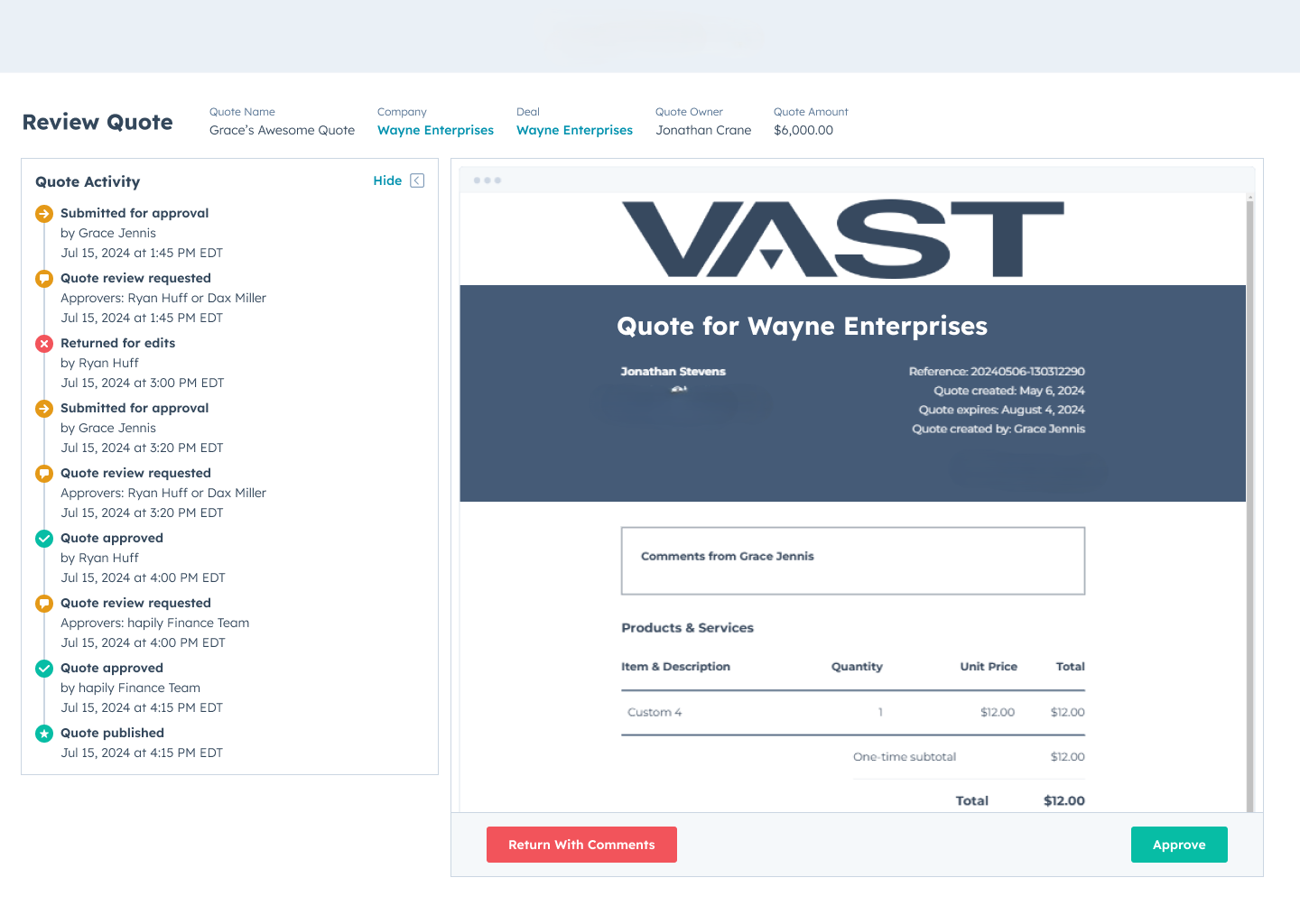
The approver reviews it on the record

The approver sees the quote on the record, next to the deal, with its audit trail, and approves it or sends it back. Once cleared it goes out, and because routing is tied to the record, it can’t be quietly altered after.

Reviewing a routed quote on the record with its audit trail

Native, not a second system

This is the real difference, and it’s the one a HubSpot rep can’t wave off. Some CPQ tools run approvals in their own console, a separate place a rep leaves HubSpot to reach, with its own state that can drift from the deal. Quotivity routes on HubSpot’s own records. The approval is on the quote, in the CRM, next to the deal it belongs to. Nothing to reconcile, nothing to switch into.

And an approval holds. The failure mode teams live with is the quote that gets approved, then silently recalled and edited before it sends, with no notification to either side. Tie routing to the record and an altered quote is a changed quote, not a settled one.

You might not need this

Conditional routing is overkill if every quote gets the same one sign-off, or none. A single step covers you. It earns its place when the right approver depends on what’s on the quote, and that call currently lives in someone’s head or a Slack thread.

What it does

It does

  • Route only the quotes that fall outside policy, on conditions you set
  • Send them to the right approver, single or multi-stage
  • Keep it all on HubSpot’s records

It doesn’t

  • Set your policy for you. It enforces the thresholds you define. What counts as an exception is your call, and pinning that down is the useful part of setup.

The core things you need, not more

This solves so many different challenges for us internally - specifically rules based quote approvals. It is a great balance of having the core things you need, without being over engineered.

Brian Werbeck, software companyBrian Werbeck — software company, 51–200 employees

“Without being over-engineered” is the whole design goal. Route the exceptions, leave everything else alone.

Questions about quote approvals

One thing to find

Find the approved quote that changed before it sent

Most teams have one. We’ll show you where routing on the record closes that gap, and which of last quarter’s quotes would have stopped for a signature.